A local business promoting an event has two solid options: send a postcard that lands in the mailbox or send an email that lands in the inbox. The direct mail vs email marketing decision usually is not about which channel is better in every case. It is about which one fits your audience, your timeline, your budget, and the action you want people to take.
For small and mid-sized businesses, nonprofits, associations, and event organizers, that distinction matters. Marketing dollars need to produce real movement, whether that means registrations, calls, donations, foot traffic, or sales. The right answer is often less about trends and more about execution.
Direct mail vs email marketing: the real difference
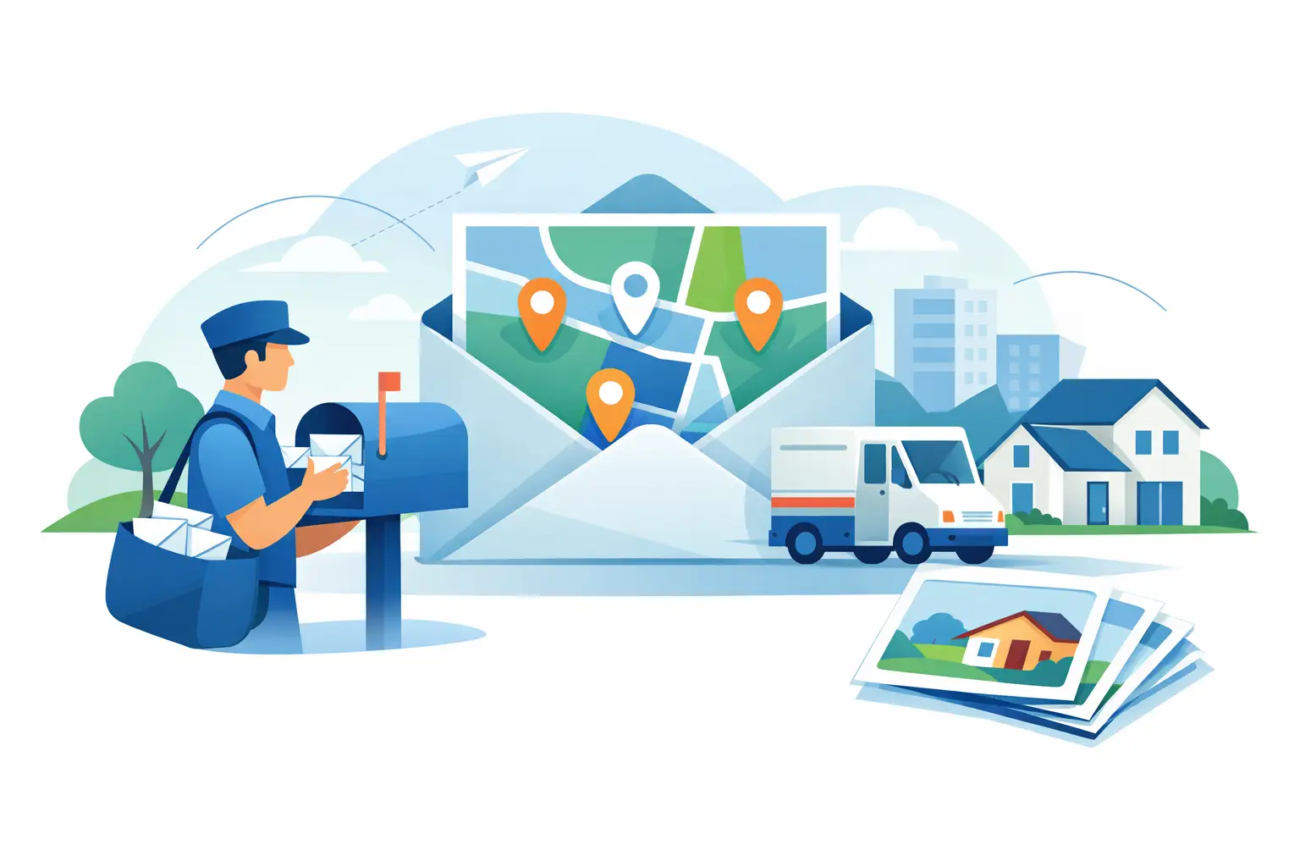
Direct mail is physical. It shows up as a postcard, letter, flyer, self-mailer, or other printed piece. Email marketing is digital, fast, and usually sent to a list you already own or manage. Both are direct-response channels, but they behave very differently.
Direct mail asks for more upfront planning. You need a mailing list or geographic targeting, a printed design, and production time. In return, you get something tangible that people can hold, post on a desk, or pass along. That physical presence can help when you are promoting higher-value services, local events, seasonal offers, or campaigns that need stronger visibility.
Email marketing moves faster and costs less per send. It works well when you need speed, frequent communication, or audience segmentation. If you want to announce a deadline, promote a limited-time offer, follow up after an event, or nurture existing contacts over time, email is usually the more efficient tool.
The trade-off is simple. Direct mail tends to cost more but can command more attention. Email is more affordable and flexible, but it competes in a crowded inbox.
When direct mail makes more sense
Direct mail tends to perform well when visibility is the main challenge. People may ignore a marketing email in seconds, but a well-designed mail piece has a better chance of being noticed simply because it occupies physical space.
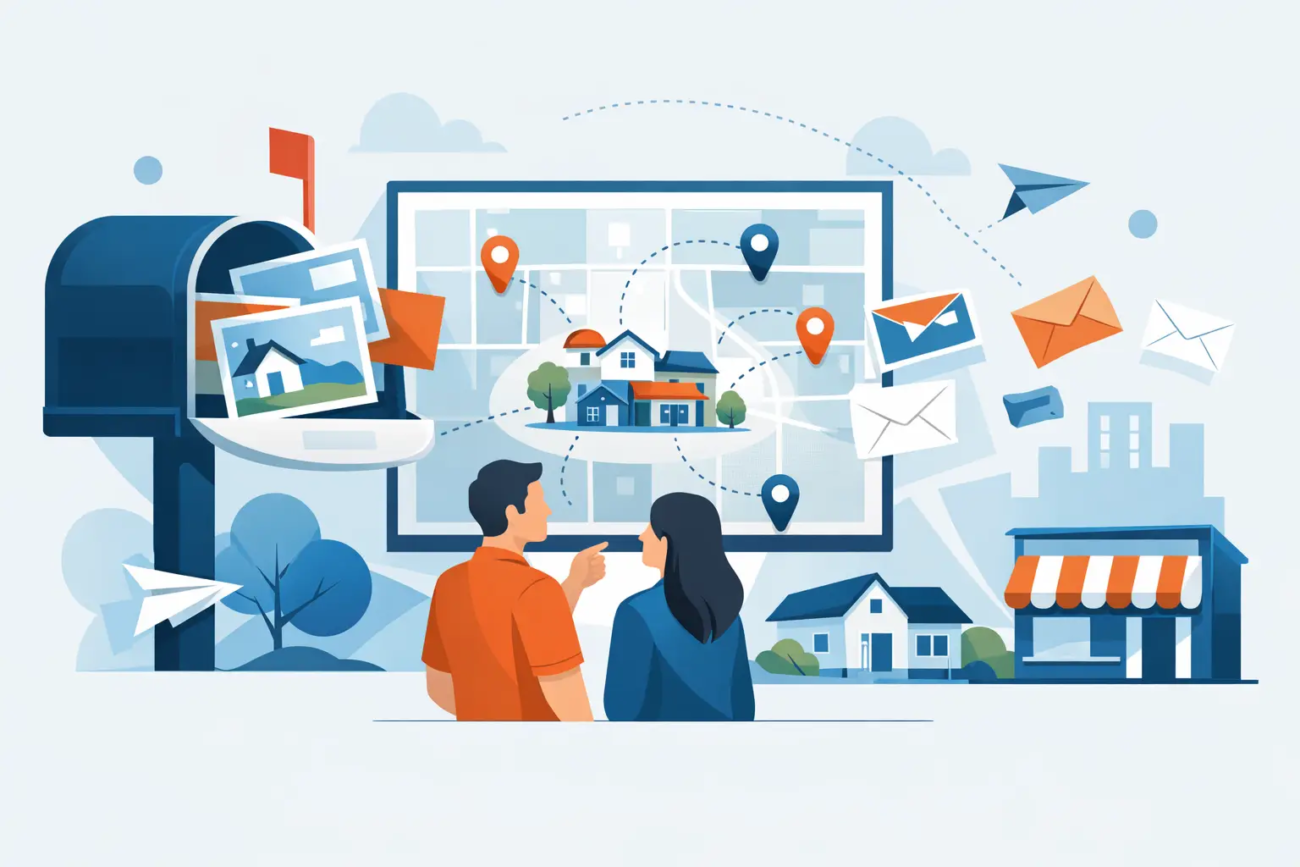
That makes direct mail a strong fit for local targeting. If your business serves a defined area, Every Door Direct Mail, route-based campaigns, and targeted mailing lists can help you reach households or businesses without needing an email database. This is especially useful for service businesses, community events, home-related services, healthcare providers, schools, and local retail promotions.
Direct mail also helps when trust and professionalism are part of the sale. A printed invitation, brochure, or personalized letter can feel more established than an email blast. For associations, nonprofits, and businesses with longer sales cycles, that added credibility can be valuable.
There is also a timing advantage that people sometimes overlook. Because direct mail requires planning, it often produces better internal discipline. Campaigns get designed earlier, messaging gets approved sooner, and the offer tends to be more focused. That structure can improve results on its own.
Still, direct mail has limits. Printing and postage add cost. Turnaround time matters. And if the offer, list, or design is weak, the campaign can become an expensive miss.
When email marketing is the better choice
Email is often the best answer when you need speed and repetition. A business can build a campaign, schedule it quickly, and adjust the message based on opens, clicks, or timing. That flexibility is hard to match with print.
For ongoing communication, email is hard to beat. It keeps current customers informed, supports repeat business, and allows you to stay visible without the cost of frequent mail drops. If your organization has regular updates, monthly promotions, event reminders, newsletters, or member communications, email gives you a practical way to stay in contact.
Email also makes testing easier. You can adjust subject lines, offers, call-to-action buttons, or audience segments and learn from the response. If one message underperforms, you can often improve the next one quickly.
But email has its own obstacles. Deliverability is not guaranteed. Open rates can be misleading. A large list does not always mean a responsive audience. And if your contact list is outdated or your messages are too frequent, email can quietly lose effectiveness.
That is why email works best when the list is healthy and the audience already has a reason to hear from you.
Cost is only part of the direct mail vs email marketing question
Many businesses start with cost, and that is reasonable. Email usually wins on pure affordability. The cost per send is low, and the setup can be simple if you already have a platform and a list.
Direct mail carries clear production and postage costs, so it can look expensive at first glance. But lower cost does not automatically mean better return. If a postcard reaches the right neighborhoods and generates appointments, donations, or sales that your email could not have produced, the higher upfront spend may be the smarter investment.
The better question is cost per result, not cost per piece. A low-cost campaign that gets ignored is still inefficient. A higher-cost campaign that drives measurable response can be the better value.
This is where goals matter. If you need broad local awareness and your email list is limited, direct mail may be the stronger option. If you want to nurture current contacts at scale, email is probably the better use of budget.
Audience quality changes everything
The channel does not carry the campaign by itself. Audience quality does.
A strong direct mail campaign depends on good targeting. That may mean a clean customer list, a purchased business list, or a geographic mailing plan based on service area and demographics. If you send to the wrong households or businesses, even strong creative will struggle.
Email has the same issue. A large contact list with poor engagement is not an asset. It is noise. List quality, segmentation, and relevance matter far more than raw volume.
For example, a chamber event invitation sent by email to active members may perform very well because the audience already knows the organization. A new home-services company trying to reach homeowners in a specific ZIP code may get more traction from direct mail because the audience has not joined an email list yet.
That is why channel choice should start with access. Are you trying to reach people who already know you, or people who do not?
The strongest campaigns often use both
This is the part many businesses miss. Direct mail vs email marketing is not always an either-or decision.
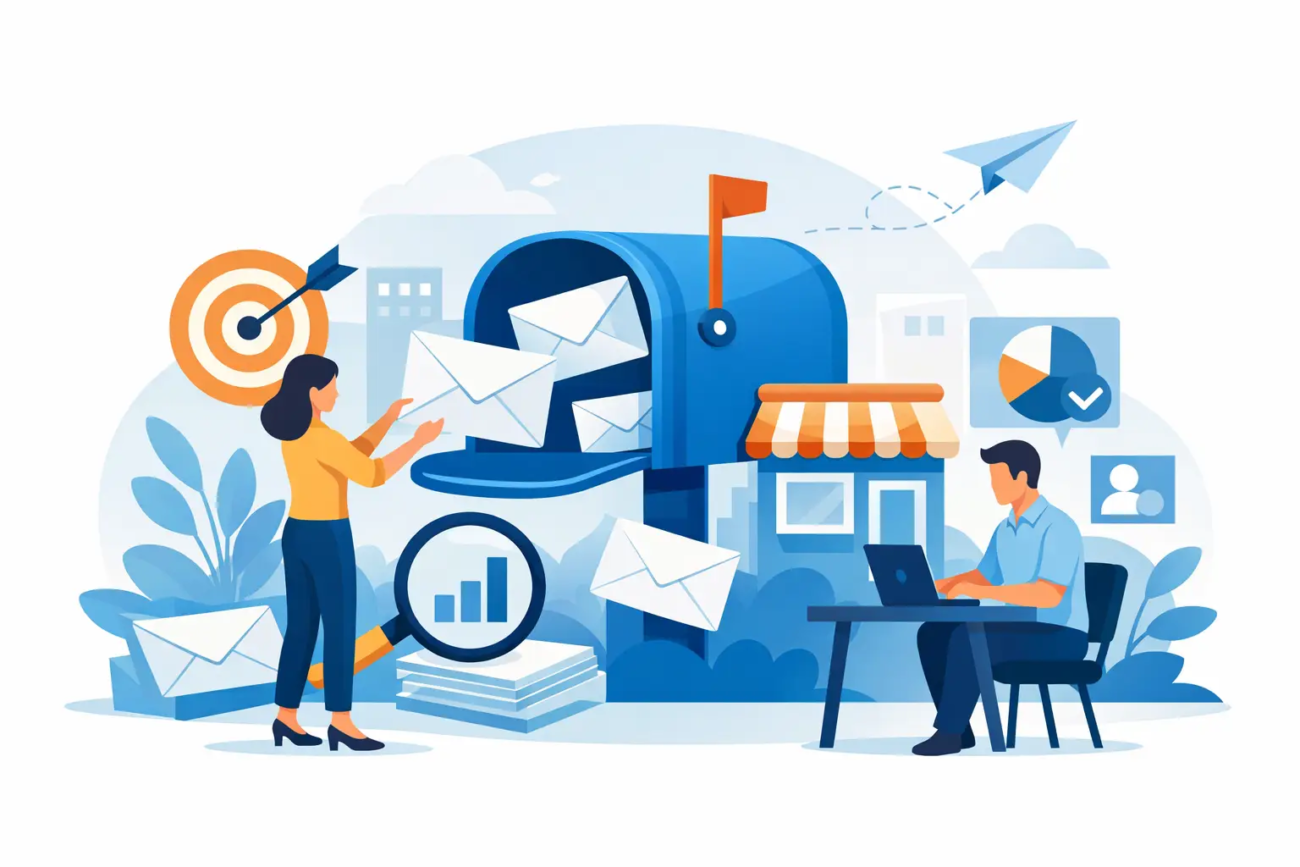
The most dependable approach is often a coordinated campaign where direct mail builds awareness and email reinforces the message. A postcard can introduce the offer, and follow-up emails can provide reminders, details, and urgency. For events, fundraising, seasonal promotions, and membership drives, this one-two approach can increase response because people see the message more than once in different formats.
The channels also support different stages of action. Direct mail can grab attention and reach new prospects. Email can nurture, follow up, confirm details, and keep the conversation going. When the creative, timing, and offer match, the combined effect is usually stronger than relying on one channel alone.
For businesses that want convenience and consistent execution, working with one partner across print, mailing, and digital outreach can also reduce mistakes. That matters when deadlines are tight and campaigns involve multiple moving parts.
How to choose the right channel for your next campaign
Start with your objective. If you want immediate visibility in a local market, direct mail deserves a serious look. If you need fast communication with an existing audience, email is likely the better fit.
Then look at your assets. Do you have a quality email list with real engagement? Do you have accurate mailing data or a clear geographic target? Are you promoting a one-time event, an ongoing offer, or a high-value service? Those details shape the smartest path.
Next, consider timing. Email can be launched quickly. Direct mail needs production and mailing lead time, but that extra planning can improve campaign quality. If your deadline is close, email may be the practical move. If your promotion is important enough to merit stronger visibility, direct mail may be worth the schedule.
Finally, think about how people buy from you. If your audience responds well to reminders and regular contact, email should play a major role. If they need a stronger initial impression or your service area is tightly local, direct mail may do more of the heavy lifting.
At Fox Tracks, we see the best results when businesses stop looking for a one-size-fits-all answer and start matching the channel to the job. A postcard is not just paper, and an email is not just a low-cost blast. Each one can work hard when the message, audience, and timing are aligned.
If you are weighing your next campaign, the smartest move is to choose the channel that gives your audience the clearest reason to respond. That is where good marketing starts, and where better results usually follow.