A rush order for 250 brochures and a long-run order for 25,000 postcards should not be priced, produced, or planned the same way. That is why clients often ask which is better offset or digital printing. The right answer depends on your quantity, timeline, budget, and how much flexibility you need during production.
For most businesses, this is not a design debate. It is an operations decision. Choosing the right print method can affect turnaround time, unit cost, color consistency, mailing schedules, and even how quickly your team can react to a promotion or event. If you are ordering business cards, sales sheets, postcards, booklets, or campaign materials, it helps to understand where each option performs best.
Which Is Better: Offset or Digital Printing?
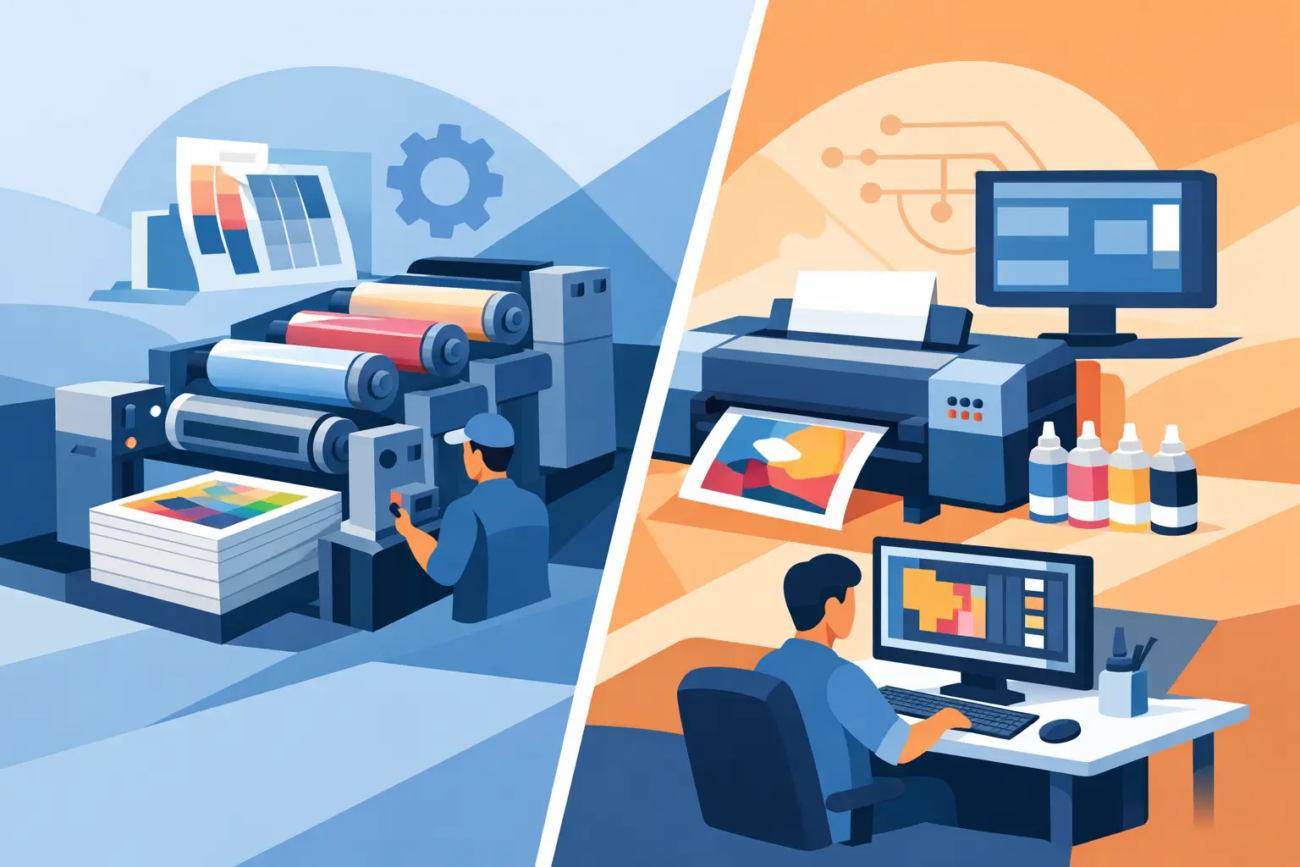
Offset and digital printing both produce professional results, but they do it in very different ways. Offset printing uses metal plates and ink transferred through rollers onto paper. Digital printing prints directly from a digital file without plates. That difference changes everything from setup time to cost per piece.
If you need a simple rule of thumb, digital printing is usually better for shorter runs, fast turnarounds, and variable data jobs. Offset printing is usually better for larger quantities, exact color matching, and projects where consistency over a long run matters most. Neither method is automatically better in every case.
That is where many businesses lose time and money. They assume the newer option is always faster and cheaper, or the traditional option always looks better. In reality, the best choice depends on the details of the job.
When digital printing makes more sense
Digital printing is built for speed and flexibility. Because there are no plates to create, setup is faster and less expensive at lower quantities. If you need 100 flyers for a meeting next week, 250 event programs, or 500 postcards with a quick revision, digital is often the most efficient route.
This is especially true for businesses that order in smaller batches. Instead of printing thousands of pieces and storing extras that may become outdated, you can print what you need now and reorder later. That helps control waste and cash flow.
Digital printing is also the clear choice for personalization. If your direct mail campaign includes different names, addresses, membership numbers, or custom offers, digital equipment can handle variable data efficiently. That matters for organizations that want more targeted communication without slowing down the production process.
Color quality in digital printing has improved significantly. For many everyday marketing materials, the difference between digital and offset is small enough that the business case matters more than the production method. Brochures, postcards, presentation folders, rack cards, and sell sheets can all look sharp and professional when produced digitally.
The trade-off is that digital printing can become more expensive on a per-piece basis as quantity rises. It may also offer fewer paper and specialty ink options depending on the project. If your order is large or your brand standards are especially strict, digital may not be the best fit.
When offset printing is the better investment
Offset printing shines when volume, precision, and consistency matter. While the setup takes longer because plates must be created, the unit cost drops as quantity increases. For large runs, offset often delivers better overall value.
If you are printing thousands of brochures, catalogs, newsletters, pocket folders, or direct mail pieces, offset can be the smarter long-term decision. The larger the run, the more that setup cost gets spread across the order.
Offset is also known for strong color accuracy. If your brand relies on exact PMS color matching, or if you need consistency across a major print campaign, offset gives you more control. That matters for franchises, associations, manufacturers, and established brands that want every printed piece to align with existing standards.
Another advantage is substrate flexibility. Offset printing can support a wide range of paper stocks, coatings, finishes, and specialty applications. If the project has a premium feel or a more complex production requirement, offset may open more options.
The trade-off is time. Offset jobs usually require longer production schedules than digital jobs, especially if proofs, press checks, or finishing details are involved. For a business facing a tight deadline, that may be enough to shift the decision.
Cost is not just about the quote
Many buyers focus on the top-line number, but the real cost of printing includes timing, storage, obsolescence, and reprint risk. A lower price per piece does not always mean lower total cost.
For example, offset may be cheaper per unit on a large order, but if your pricing, staff list, event details, or service offerings are likely to change, overprinting can become expensive. Outdated materials sitting in a storage room are not a savings. In that situation, digital printing may cost more per piece but less overall because you are only printing what you can use.
On the other hand, ordering repeated short digital runs for a piece that never changes can add up quickly. If you know you will use 20,000 inserts or mailers over the next few months, offset may be the more cost-effective choice.
This is why a dependable print partner looks beyond the initial estimate. The right recommendation should reflect how you actually use the material, not just how much it costs to produce once.
Quality differences that matter and those that do not
Businesses sometimes ask whether offset looks more professional. The honest answer is that both can look professional. The better question is what kind of quality matters for your project.
If you are printing a standard postcard, flyer, or handout, digital quality is often more than sufficient. Most recipients will judge the clarity of the message, the strength of the design, and the feel of the piece long before they think about the print method.
If you are producing a high-volume brand piece with precise color expectations, heavy solids, or specialty finishing, offset may offer an edge. It tends to deliver excellent consistency across long runs and can be better suited for exacting brand requirements.
For many organizations, the practical difference comes down to use case. A local event handout and a premium annual report should not be evaluated the same way. Quality should be measured against the purpose of the piece.
How to choose the right print method for your project
If the deadline is tight, the quantity is low, or the content may change, digital printing is usually the better fit. It keeps production moving and gives you flexibility.
If the quantity is high, the brand standards are strict, or the piece needs a specific paper and ink treatment, offset printing often delivers better value and control.
The gray area is where experience matters. A run of 1,500 to 3,000 pieces, for example, can go either way depending on size, paper stock, coverage, finishing, and mailing requirements. That is why estimating should not happen in a vacuum.
At Fox Tracks, we look at the full picture: what you are printing, how fast you need it, where it is going, and whether this is a one-time order or part of a larger campaign. That helps clients avoid paying for the wrong process and keeps projects on schedule.
Which is better offset or digital printing for common business jobs?
For business cards, short-run brochures, event flyers, and personalized direct mail, digital printing is often the best choice because it is fast and flexible. For long-run postcards, large brochure quantities, catalogs, and projects requiring exact color matching, offset printing usually performs better.
There are exceptions. A premium business card on a specialty stock might lean offset. A time-sensitive postcard campaign with segmented messaging might lean digital even at a moderate volume. The purpose of the piece matters as much as the category.
The best printing decisions support your broader marketing goals. If speed helps you launch on time, that has value. If color consistency protects your brand across thousands of pieces, that has value too. Print is not just a production task. It is part of how your business shows up in the market.
If you are deciding between offset and digital, start with the outcome you need, not the machine you think you want. The right process is the one that meets your deadline, fits your budget, and delivers a piece you can use with confidence.


