A rushed print order usually shows its flaws at the worst possible time – at the trade show table, in the sales meeting, or right before a fundraising event. That is why choosing the right digital and offset printing services is not just about getting ink on paper. It is about matching the method to the job so your materials look professional, arrive on time, and support the results you need.
For many businesses, associations, and local organizations, the question is not whether print still matters. It does. The real question is which type of printing makes the most sense for the piece you are ordering, the quantity you need, and the timeline you are working under. When you understand the difference, you make better decisions on cost, quality, and turnaround.
What digital and offset printing services actually mean
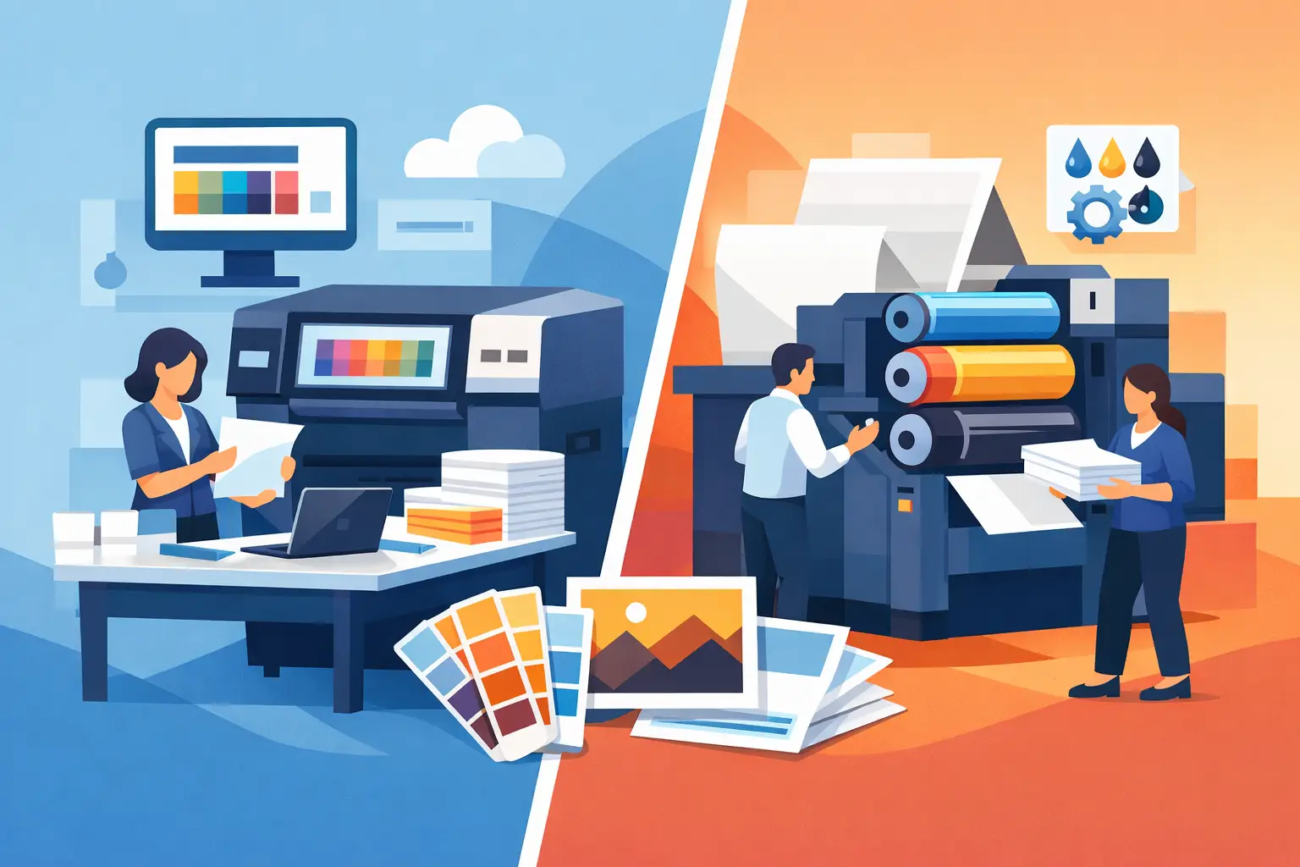
Digital printing is the faster, more flexible option for many everyday marketing needs. Files are sent directly to the press without creating metal plates, which makes setup simpler and quicker. That is why digital printing is often the right fit for short runs, variable data projects, and jobs that need to move fast.
Offset printing uses plates and a traditional press process to transfer ink onto paper. It takes more setup at the front end, but it becomes very efficient for higher quantities and projects where color consistency matters across a large run. Offset is often the better choice for long-run brochures, magazines, folders, postcards, and other materials where a polished, high-volume finish is the priority.
Neither method is automatically better. It depends on what you are printing and what matters most for the job.
When digital and offset printing services make the most sense
If you need 250 flyers for an event next week, digital printing is usually the practical answer. You avoid the plate setup cost, production moves quickly, and you can often make file updates without restarting a complex process. This is especially useful for businesses that frequently revise pricing, promotions, staff information, or event details.
Digital printing also works well for personalized campaigns. If you are mailing postcards with different names, locations, or offers, digital presses can handle that variable data efficiently. For direct mail, this can be a real advantage because personalization often improves response rates.
Offset printing earns its value when quantity increases. If you need several thousand brochures or a large run of annual reports, catalogs, or membership materials, the setup cost is spread across more pieces. At that point, the per-piece price often becomes more attractive. Offset can also be the better route when exact brand color matching is critical, especially for organizations with strict visual standards.
The simplest way to think about it is this: digital favors speed, flexibility, and shorter runs. Offset favors scale, consistency, and unit cost at higher volumes.
Cost is not just about the quote
A lot of buyers compare print methods by looking at the first number on the estimate. That is understandable, but it can lead to the wrong decision.
With digital printing, the upfront cost is usually lower for smaller jobs because there are no plates and less setup. If you only need a limited quantity, digital can be the most affordable path from start to finish. It also reduces the risk of overordering. That matters when content changes quickly or when you are unsure how many pieces you will actually use.
With offset printing, the setup cost is higher, but the economics improve as volume grows. Ordering too few pieces through offset can make the job unnecessarily expensive. Ordering enough pieces can make it the smart long-term choice.
There is also a hidden cost in choosing the wrong quantity. If you print too many materials that become outdated, you lose money even if the unit cost looked good. If you print too few and have to reorder quickly, you may pay more in rush production and shipping. A dependable print partner helps you balance quantity, shelf life, and budget instead of quoting in a vacuum.
Quality depends on the project, not just the press
People often assume offset always looks better. That used to be a simpler answer than it is now. Modern digital presses produce strong color, sharp text, and professional results for a wide range of applications. For business cards, postcards, flyers, booklets, and many sales materials, digital quality is more than sufficient.
That said, offset still has advantages on certain projects. Large runs tend to benefit from consistent color across the entire job. Specific ink requirements, including Pantone matching, may also point toward offset. Certain paper stocks and specialty finishes can perform better with one method over the other, depending on the design.
This is where consultative guidance matters. The right question is not which process is better in theory. It is which process will produce the look, feel, and consistency your piece needs in real use.
Turnaround can change the decision
Deadlines drive many print purchases. If your event date is fixed or your sales team needs materials by a certain week, turnaround is not a side issue. It is often the deciding factor.
Digital printing usually wins on speed. Because setup is simpler, jobs can move from proof to production more quickly. That makes digital ideal for short-notice campaigns, last-minute updates, and recurring materials that need frequent refreshes.
Offset takes more planning. Plate creation, press setup, and production scheduling mean more lead time. That does not make offset slow in a bad sense. It just makes it better suited for jobs that are planned properly and ordered with enough runway.
If you know your event calendar, seasonal promotions, or annual mailings in advance, offset may fit well. If your marketing shifts often or you operate in a fast-moving environment, digital may save you from deadline pressure.
Why print works better when it connects to the rest of your marketing
Printing should not live in a silo. A brochure, rack card, banner, or direct mail piece works harder when it supports the rest of your marketing plan.
For example, a postcard campaign is stronger when the design matches your website landing page. Event signage works better when it follows the same brand standards as your social media promotion. Sales sheets are more useful when they align with your email messaging and current offers. Print gets better results when it is part of a coordinated effort rather than a standalone order.
That is one reason many businesses prefer working with a partner that handles both production and marketing support. Instead of managing separate vendors for design, print, web, and campaign execution, you get a more efficient process and fewer chances for details to slip through the cracks. For businesses with limited internal staff, that convenience is not just nice to have. It saves time and reduces risk.
Common print projects and the best fit
Short-run business cards, flyers, event handouts, and personalized mailers often lean digital because they need flexibility and fast delivery. Large brochure runs, association publications, annual reports, and broad-distribution postcards often lean offset because volume and consistency matter more.
There are also mixed situations. A company may print a long-run offset brochure shell, then add digitally printed inserts that change by market, season, or audience. That hybrid approach can control costs while keeping content current. The best providers will tell you when a blended solution makes more sense than forcing every project into one method.
What to ask before placing a print order
Before approving any print job, it helps to clarify a few practical details. How many pieces do you really need? How quickly do you need them? Will the content change soon? Does exact color matching matter? Are you mailing the piece, handing it out, or displaying it? Answers to those questions usually point toward the right process.
It is also worth asking about paper stock, finishing options, proofing, and delivery timing. A good print experience is not only about what happens on the press. It includes file prep, communication, scheduling, and follow-through. If a provider cannot give clear guidance before the order, that usually does not improve once production starts.
For many organizations, the best choice is a print and marketing partner that can advise on the method, produce the materials, and support the larger campaign. Fox Tracks works this way because clients often need more than a print run. They need a dependable team that can help them stay on brand, meet deadlines, and keep projects moving without unnecessary back-and-forth.
The right print decision is rarely about picking sides between digital and offset. It is about choosing the process that fits your goals, your timeline, and your budget – then working with a team that treats your deadline like its own.